
CELEBRITY
News Update: A senior U.S. military general’s explosive “traitor” accusation against Donald Trump ignites a national firestorm, raising urgent questions about military neutrality, democratic accountability, and whether America’s deep political divisions are reaching a dangerous breaking point.click in the link belo

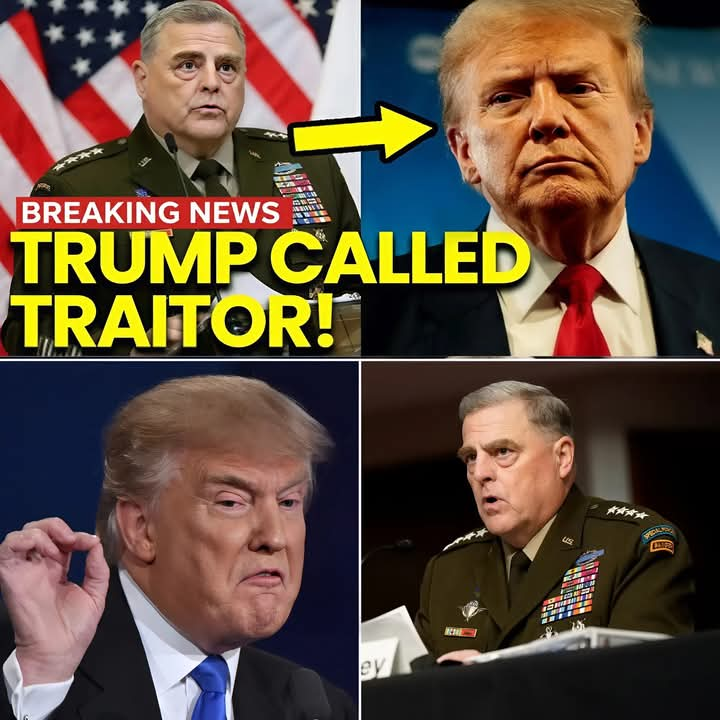
A senior U.S. military general’s explosive “traitor” accusation against Donald Trump ignites a national firestorm, raising urgent questions about military neutrality, democratic accountability, and whether America’s deep political divisions are reaching a dangerous breaking point.Published 5 hours ago on January 11, 2026By Gianna Spencer.
Washington has been thrust into renewed turmoil after a senior U.S. military general publicly referred to former President Donald Trump as a “traitor,” a statement that has sent shockwaves through political, military, and public circles nationwide. The unprecedented accusation has reopened deep national wounds, raising urgent questions about loyalty, democratic norms, and the fragile relationship between civilian leadership and the armed forces.
The comment, reportedly made during a discussion about national security and constitutional responsibility, immediately sparked outrage and disbelief. Rarely do senior military officials speak so bluntly about political leaders—especially a former commander-in-chief.
The word itself carries extraordinary weight within military culture, where loyalty to the Constitution is treated as sacred.
Why the Statement Matters
The U.S. military is expected to remain strictly apolitical, a principle that has long served as a stabilizing force in American democracy. When a high-ranking general breaks that tradition, it signals a level of concern that many believe cannot be dismissed lightly.
Supporters of the general argue that the remark reflects deep alarm over actions they believe endangered democratic institutions or national security. They say silence in such moments would be a greater betrayal of constitutional duty.
Critics, however, see the comment as reckless and dangerous. Trump allies have condemned the statement as an unacceptable politicization of the military, accusing the general of undermining trust in the armed forces and inflaming an already divided nation.
Trump Camp Pushes Back
Trump’s supporters were quick to respond, calling the accusation defamatory and politically motivated. Some allies argue the statement proves what they describe as a hostile establishment willing to attack Trump at any cost. Calls for investigations into the general’s conduct have already begun circulating among conservative lawmakers and commentators.
Trump himself has pushed back forcefully, framing the controversy as another attempt to delegitimize his leadership and silence dissent. His response has energized his base, further intensifying the national debate.
A Nation on Edge
The fallout has extended far beyond Washington. Veterans, constitutional scholars, and political analysts are now debating whether the general’s comments represent moral courage or a dangerous breach of protocol. Social media platforms are flooded with arguments, hashtags, and viral clips dissecting every word.
At its core, the controversy highlights a deeper struggle over accountability and truth in American public life. When trust in institutions is already strained, moments like this can either force long-overdue reckoning—or deepen divisions that feel increasingly impossible to bridge.
What Comes Next
As pressure mounts, the Pentagon faces difficult questions about discipline, free speech, and the boundaries of military authority. Lawmakers from both parties are watching closely, aware that how this situation is handled could set lasting precedents.
t In One Month

Internet Meltdown: Unverified Serena Williams OnlyFans Content Sends Social Media Into Chaos… Watch full photos gallery here…

BREAKING NEWS Serena Williams shocks the internet after stepping out in an ultra-revealing outfit, igniting fierce debate, viral reactions, and headlines as fans argue fashion freedom versus public shock worldwide. See more here…

This 22-Year-Old Olympic Champion was asked If She Thinks Before She Speaks. Her Answer Is a Lesson in Neuroscience.See her response in the link below

*”The Gates Legacy Under Siege: Can Phoebe Shatter Expectations with Phia?”*

OMG! Look at This New Serena Williams Mouth-Watering Backside Private Photo Has Fans All Saying the Same Thing After It Slipped. See more Breathtaking Photos Here..👇

SHOCKING: Simone Biles Drops Emotional Message for Fans as She Announces Retirement at 27 in Tears Few Minutes Ago, After Securing Gold at Paris Olympics. Biles Further shared.See more…

⚡️OMG! Serena’s SECRET BEDROOM CUDDLE WITH Olympia & Baby Adira WILL SHOCK YOU! 😱💥 The Internet Is BLOWING UP – You HAVE to See These SWEET (and SUPER RARE) Family Photos! 👇👇

“From banned catsuit to a show‑stopping tutu—Serena’s US Open outfit is breaking the internet! 🔥 Click to see the viral video and tell us which second had you screaming! 😱

“Breaking: Serena Williams doctors just removed a massive cyst from her neck – fans expressed their grievance and they can’t stop praying for her speedy recovery. 🙏 Tag a friend who’d want to send good vibes!

HIDDEN FACT!!!:”Footage of Jay Z and Diddy “taking turns” on Beyonce at a Diddy party in 2003 are allegedly being sold on the dark web. Videos and pictures are starting to pop up all over the Internet”. SEE VIDEOS & PICS VIA LINK…

Cops Raid Jay-Z’s House After Beyoncé Reveals He Was Holding Nicki Minaj Prisoner The music industry has always been a den of thieves dressed in designer suits, but the current civil war between Nicki Minaj and Jay-Z is exposing a level of corporate rot that even the most cynical fans couldn’t have imagined. This isn’t just about a “beef” or a few stray tweets; it’s a full-scale assault on the carefully curated legacy of the Carters, and the cracks are finally starting to show. See More:
